
Everything you need to know for a rewarding photography session on Caño Negro’s waterways.
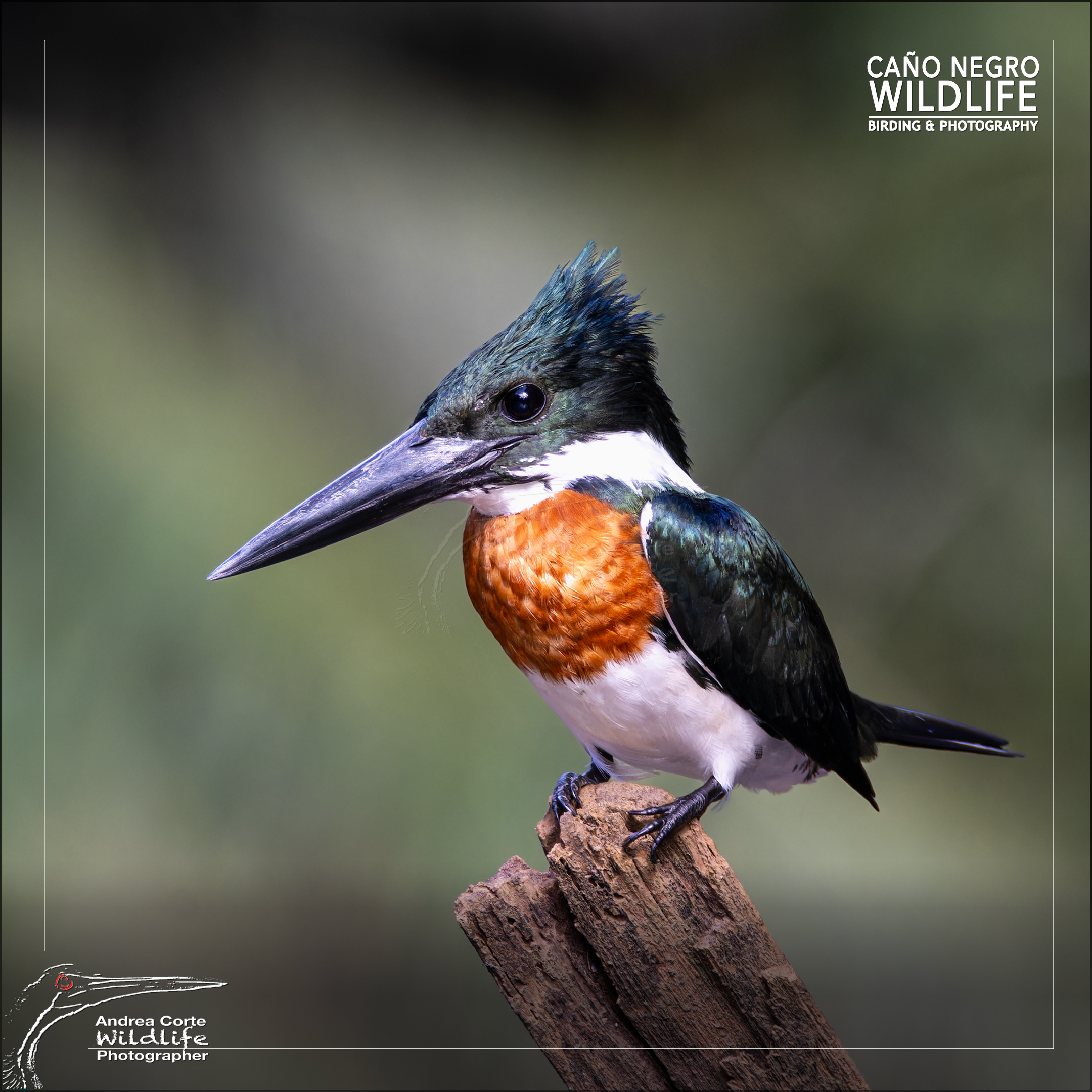
Because Caño Negro is a wetland, wildlife photography here takes place almost entirely during boat outings. Its lagoons, rivers and wooded waterways form the routes we follow to explore different habitats and find photographic opportunities.
Photography from a Boat in Caño Negro Wildlife Refuge, Costa Rica: Position, Pace and Patience
By Andrea Corte · Wildlife photographer and photography guide
Website · Facebook · Instagram
Hotel de Campo’s boat outings are conducted with care for wildlife and its surroundings. Many animals encountered along these waterways are accustomed to passing boats and continue their activities as we observe them. This makes the boat a valuable photographic platform, allowing us to reach useful viewing distances and, in some encounters, photograph wildlife at close range while giving it space to behave naturally.
Working from a boat also means working with a moving viewpoint. The animal, the boat and the light can change while you compose the image. Learning to recognise those changes helps you decide how to frame the subject, when to photograph it and what to communicate to the captain.
My approach follows the principles introduced in Wildlife Photography in Caño Negro Wildlife Refuge—observe the conditions, know your equipment and give wildlife room to behave naturally.
Choose the background as well as the subject
When you find an animal, look beyond it. Vegetation, open water, reflections and bright sky can each change how the subject appears in the photograph.
One of the advantages of photographing from a boat is being able to assess the scene before reaching the subject. In Caño Negro’s open areas, we can often identify an animal from a distance, observe the direction of the light and consider the backgrounds available along our approach.
That early view gives us time to discuss where to position the boat. We may seek vegetation behind the animal, open water around it or an angle that separates it from distracting branches. E. J. Peiker’s guidance on photographing birds from boats also highlights how a change in viewpoint can alter the background while the animal remains in place.
Compared with walking through dense, shaded forest, where vegetation and the available trail can restrict our viewpoint, open waterways often offer greater freedom to choose an angle. The boat allows us to explore different relationships between subject, light and background, creating several photographic possibilities within the same encounter.
Describe the composition you are seeking to the guide and captain. They can assess the approach and positioning available, taking water conditions, access and the animal’s behaviour into account. This flexibility helps us make the most of the light and surroundings at that particular moment.
Work with the boat’s movement
A subject resting on a branch may appear stationary while the camera continues moving with the boat. That movement affects both framing and your ability to maintain focus.
Controlled boat movement can also become a creative tool. Through the precise handling of Hotel de Campo’s captains during photographic outings, we can explore different angles of a subject and changing relationships between foreground and background. For still photography, this can produce several compositions during the same encounter.
For video, a carefully coordinated movement can create a travelling viewpoint, revealing the subject and its surroundings as the boat moves. The photographer can combine this with a gentle horizontal pan to maintain the desired framing. Where conditions allow, the boat itself provides the movement through the scene without installing a dedicated camera track. The result still depends on the water, the camera’s stability and coordination with the captain.
Autofocus and shutter speed also deserve attention. Peiker discusses continuous autofocus and faster shutter speeds as tools for still photography from a moving platform. Jaymi Heimbuch describes how movement makes finding and tracking a subject more demanding. Practise locating the animal and maintaining focus before trying to refine every detail of the composition.
The appropriate settings depend on movement, light, equipment and whether you are taking photographs or recording video. The articles on preparing your wildlife photography equipment and recording a wildlife video sequence develop those decisions.
Read the light as your viewpoint changes
Moving around a subject can change the direction of illumination, the visible shadows and the brightness of the background.
Seeing the subject from a distance often gives us time to prepare the camera before the approach. Observe whether the animal is in sunlight or shade, consider its activity and check your exposure and focus settings for the photograph you intend to make. Preparing early leaves more attention available for composition when you reach a useful position.
Continue reassessing as you move. A position that improves the background may also change the light on the animal, and a passing cloud can alter the scene during the approach.
Consider light and background together and check your exposure as the encounter develops. I explore this relationship further in photographing Caño Negro’s changing light.
Communicate the photograph you are seeking
Describe the visual result you want to achieve. Explaining that a branch crosses the subject or that you want to include its reflection gives the captain a clearer understanding of your intention.
The captain can assess whether the requested position is feasible under the conditions. For a moving video shot, discuss the intended direction and pace before recording. Coordination between photographer, guide and captain becomes part of the photographic process.
Give an encounter time to develop
Moving on opens the possibility of another subject. Remaining gives you time to observe the current encounter and reconsider the image.
Decide what interests you about the animal. Its posture, surroundings or activity may justify waiting. Continue watching for signs that your presence is affecting its behaviour and follow the guide’s judgement about when to withdraw.
Plan a photographic outing with me
Through Hotel de Campo’s private birding and photography experiences, I help visitors work with the opportunities each encounter offers. We consider your photographic priorities, equipment, positioning, pace and observation time.
You can explore my photography at andreacorte.com and follow my work on Facebook and Instagram.
References
The descriptions of photographic approaches and boat coordination draw on my field experience in Caño Negro. The following sources provide complementary guidance.