
Follow the encounter from a distant view to portraits, behaviour and unexpected moments.
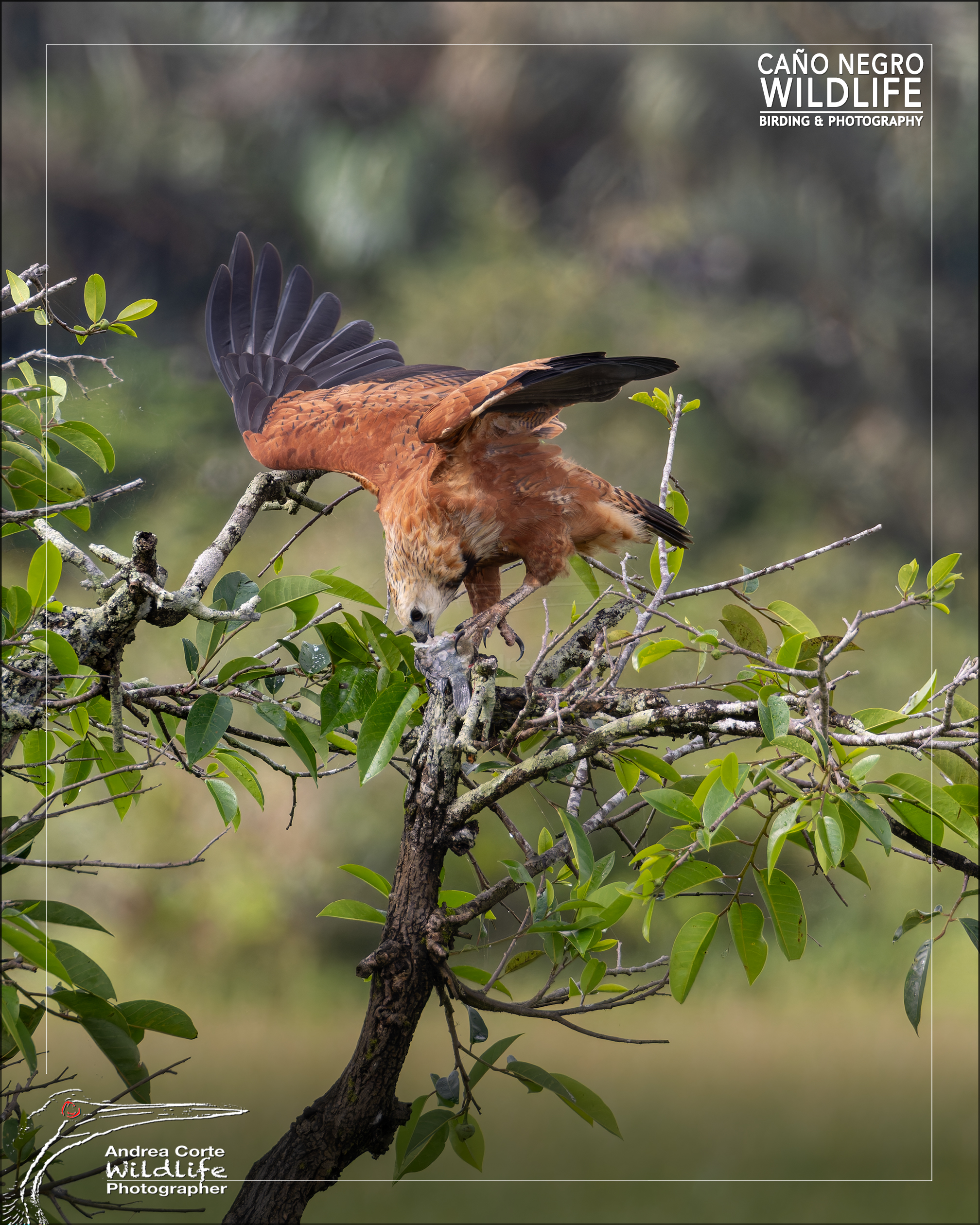
A gradual approach can offer several ways to photograph the same animal. In Caño Negro, we usually begin observing a subject from a distance, then approach progressively by boat as conditions and its behaviour allow. Along the way, we can photograph the habitat, refine the composition, capture details and remain ready for an unfolding action.
From Portraits to Behaviour: Telling Wildlife Stories in Caño Negro, Costa Rica
By Andrea Corte · Wildlife photographer and photography guide
Website · Facebook · Instagram
This article draws on my field experience photographing wildlife in Caño Negro. It develops the approach introduced in Wildlife Photography in Caño Negro Wildlife Refuge.
Begin the story from a distance
The photographic encounter starts when we first notice the animal. From a distance, there may already be an opportunity to show the subject within the wetland.
A wider composition can include water, reflections, vegetation or the branch where a bird is resting. These surroundings establish the setting and introduce the relationship between the animal and its habitat.
Make use of the first opportunity. Observe the subject, prepare the camera and consider the photograph available from your current position. The animal may move before a closer view becomes possible.
Let the approach offer different compositions
As the boat approaches gradually, the subject occupies a different proportion of the frame. The angle, background and relationship with surrounding elements may change too.
This progression can provide several images during one encounter. An initial photograph may establish the habitat. A later frame may show the whole animal more clearly. If the encounter allows, a closer composition may reveal plumage, posture or facial detail.
A zoom lens gives you flexibility within that progression. You can include more of the surroundings or concentrate attention on the subject as the viewpoint changes.
Moose Peterson’s discussion of visual storytelling emphasises a background that contributes to the subject’s story. In Caño Negro, the gradual boat approach gives us opportunities to explore that relationship.
Follow behaviour throughout the encounter
Birds form a large part of our photographic encounters, and their behaviour can vary during the approach. A bird may be resting, preening or watching its surroundings when we first observe it.
Keep following what it does as you photograph. Its posture and activity may suggest a different image from the one you initially imagined.
The approach can therefore produce a sequence combining setting, appearance and behaviour. What it offers depends on the actual encounter and how attentively we respond.
Stay with the encounter, not the playback screen
Keep your attention on the animal throughout the encounter, including as we move away. A bird may change posture, resume an activity or interact with another animal at any point. An interesting photograph can appear during the approach, while we remain in position or as we leave.
In my field experience, repeatedly taking a photograph and immediately reviewing it is one of the habits that causes photographers to miss opportunities. While attention is on the playback screen, the encounter continues.
A particular gesture or interaction may happen only once. Staying observant gives you a better chance of recognising it and responding in time.
Mirrorless cameras help reduce the need for repeated checks. With exposure simulation enabled, the electronic viewfinder or live display lets you see how your exposure choices affect the image before taking the photograph. In practical terms, what you see is close to what you will capture.
Learn to use that preview while composing, especially if you have recently moved from a DSLR to a mirrorless system. Make any necessary check purposeful, then return your attention to the animal.
If you need more time to review, tell your guide. We can coordinate a pause to check the photographs and make adjustments before continuing the outing. Save the detailed selection and comparison of images for afterwards.
The aim is to spend the encounter watching, anticipating and photographing. Familiar equipment and a simple working approach help you do that, as explained in preparing your wildlife photography equipment.
Balance a close portrait with room for action
A tightly framed portrait and a photograph of sudden movement require different amounts of space. When you zoom in closely, you may capture fine detail but leave little room for a bird to stretch its wings or take flight.
If movement appears possible, consider widening the framing. Leaving space around the bird can help you accommodate an opening wing or a change of position.
This is a creative decision made throughout the encounter. You may choose a close view for a portrait, then open the zoom to remain ready for action. Knowing your equipment helps you make that adjustment promptly.
Let the animal guide the distance
A bird may begin paying attention to the boat as we approach. Treat that change as information about the encounter.
If our presence interrupts its activity or produces signs of disturbance, stop and reassess with the guide and captain. Give the animal space to continue naturally. We do not continue approaching to make it fly.
Being prepared for spontaneous movement is part of wildlife photography. Respecting the subject determines how far the approach should proceed.
Select the images that tell the encounter
Afterwards, review the photographs as a sequence. A wide view may establish the setting, a closer image introduce the subject and another frame show an activity.
Choose photographs that contribute different information. The sequence should reflect what you observed, with captions that distinguish visible behaviour from uncertain interpretations.
Plan time for a photographic approach
Hotel de Campo’s private photographic outings allow me to coordinate positioning, pace and observation time with the captain and the photographers aboard.
Explore Hotel de Campo’s private birding and photography experiences to discuss the subjects and kinds of images you hope to create.
You can explore my photography at andreacorte.com and follow my work on Facebook and Instagram.
References
The description of the gradual approach and framing decisions draws on my field experience in Caño Negro. The following references provide complementary principles on composition, wildlife welfare and camera previews.